NVG Pilot Training
Turn to ASU for customized, mission-specific NVG training that matches your operational needs. Our military-trained instructors deliver comprehensive courses for pilots, crews, and maintenance personnel. We offer initial, recurrent, CFI, and NVG maintenance training.
You can train at our dynamic Boise, Idaho facility, or we can bring the training to you. ASU provides FAA-certified fixed- and rotary-wing programs under Parts 135 and 141. We help you stay safe, skilled, and mission ready.
Diverse Training & Specialized Environments
Choose to complete your training in Boise, Idaho, and you won’t be disappointed. One flight can take you over mountain peaks, valleys, confined spaces, and open water. You may also navigate dense forests and arid deserts covered in dust or snow. Idaho has more backcountry airstrips than any other state in the lower 48. This unmatched diversity creates an NVG training experience that sets ASU apart.
Environment Using Bell 505
Rotary Wing
NVG Training
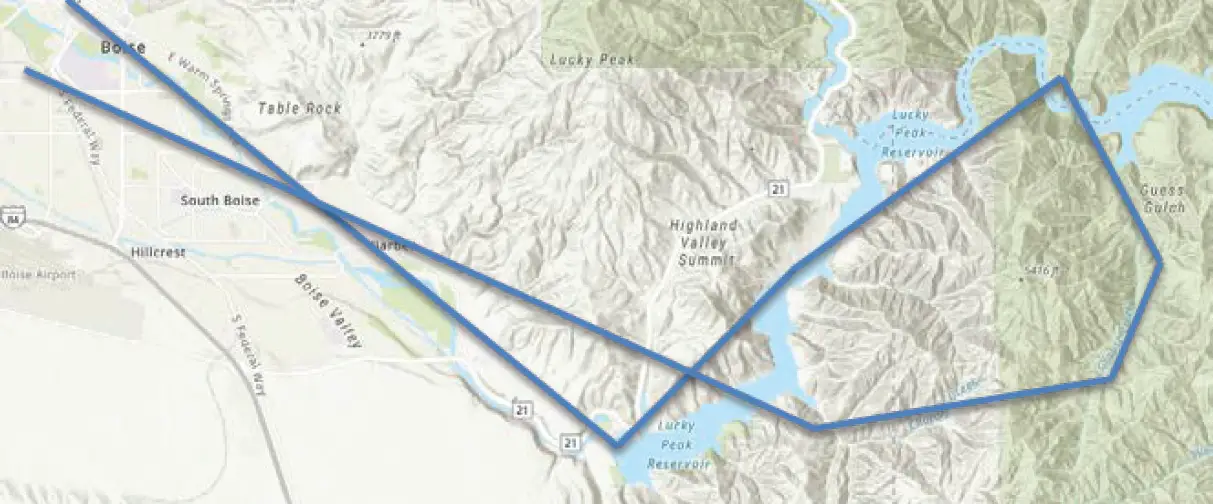
This terrain map shows the vast training areas available to our customers. The route begins at Lucky Peak Reservoir—the first turnpoint shown at the bottom of the image—and stretches many miles to the north and east. This approved nap-of-the-earth training area offers diverse challenges, including overwater flight, pinnacle landings, confined space operations, and seasonal snow or dust landings.
Within Boise Class C airspace, a nearby landing strip is also available. Pilots can use it to practice traffic patterns, improve NVG scanning skills, and gain confidence operating the Bell 505.
Rotary Wing
NVG Training
Environment Using Cessna 206
Fixed Wing
NVG Training
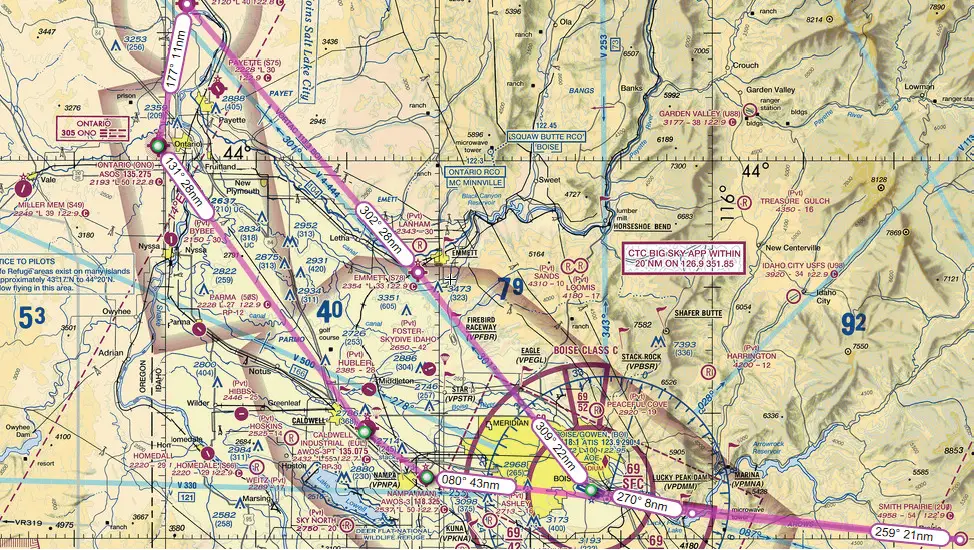
The snapshot shows commonly used training locations for airplane students. Multiple lit and unlit runways are scattered throughout the Treasure Valley. To the north and south, pilots encounter steep climbs and complete darkness. This terrain lets students experience the challenges and beauty of elevated backcountry flying with high-quality NVGs and skilled instructors. Boise offers a mix of environments—urban, rural, and desert—without the humidity.
ASU also operates an FAA-approved Part 141 flight school for initial private pilot certification. Training takes place in Boise, Idaho, using a Bell 505 and a Cessna 206.
Fixed Wing
NVG Training
What type of NVG training does ASU offer?
- ASU offers NVG maintenance training as well as NVG flight training.
- Maintenance training teaches technicians how to conduct the required 180-day inspections required by the FAA and RTCA DO-275.
- Flight training teachs aviators the techniques used to capitalize on all of the advantages of flying with NVG while at the same time shows aviators how to recognize the hazards of flying at night.
How does a pilot receive an endorsement to fly NVGs?
- With ASU, the aviator will conduct 8 hours of academics which include subjects outlined in CFR 61.31k along with additional training that highlights some of the techniques and experiences ASU has acquired over the last 20 years in the industry.
What type of aircraft does ASU use to conduct NVG training
- The Bell 505 was specifically selected to enhance and accommodate the needs of the student pilot in developing good NVG flying skills. This aircraft has exceptional unobstructed viewing from the front and middle rear seats. The modern crew station enhances pilot situational awareness and exceptional NVG compatibility utilizing the Garmin GXI flight displays.
What equipment is required to conduct NVG Training?
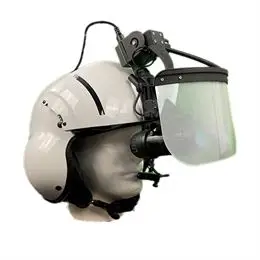
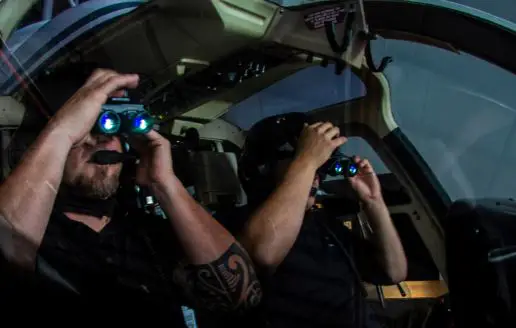
- Normally a student will bring a helmet. But if the student does not have a helmet, ASU has many different sizes to accommodate any student large or small. Additionally, the students will be equipped with the newest state of the art NVG technology. We expose the new pilots to ANVIS 9 green and white phosphorus goggles as well as our E3 Night Vision Goggle. If you are an aviator receiving recurrent training you have your choice of goggle type, however, most will choose the lightweight E3 NVG.
How long is the course?
- If you are a new pilot seeking an endorsement ASU will spend the first day discussing all aspects of night vision and how the aviator can safely navigate the challenges of flying at night with the NVG. Over the next three nights of flight training the aviator will accrue approximately 5 hours of NVG flight experiencing everything from bright cultural lighting conditions to the darkest most challenging mountain environments.
- If you are a pilot seeking recurrency we will spend approximately four hours reviewing academics followed by approximately 1.5 to 2 hours of flight reacquainting aspects of flying with NVG.
- The course can also be tailored to suit the individual and desired flight time.
What type of flying is required?
- Other than training normal and abnormal flight conditions with the night vision goggle we train basic maneuvers and maneuvers in adverse dark environments. ASU offers a unique and challenging flight environment for the student. Everything from bright culturally lighted environments to desert low contrast and mountainous conditions. Our goal is to ensure the aviator is experienced and proficient with all types of NVG environments.
- Multiple Military Applications
- Emergency Medical Services
- Search and Rescue
- Law Enforcement
- Agricultural Spraying
- High Altitude/Mountain Operations
Mission Specific Programs
More than 8,000 pilots and crew have been trained by ASU instructors. We hold FAA certifications in Part 135 and 141. All of our instructors have vast experience operating NVG’s in these mission sets. They have employed weapon systems under zero illumination conditions with NVG’s and have saved lives on pinnacles with the best NVG’s available on the market.